Pages

Thursday, 26 September 2019

My Investigation on climate change

ACIDIFICATION

DEFINITION:

What is happening to the oceans?
The oceans are absorbing about the one third of the carbon dioxide in the atmosphere. 

What does this do to shellfish?
It does things like coral growing a little bit a lot from the shellfish, and the inside has a little bit of it.

HOW DOES CLIMATE CHANGE CONTRIBUTE TO THE ACIDIFICATION OF OUR OCEANS?

Ocean acidification refers to decreasing levels of pH in the ocean, which makes the sea more acidic.

Wednesday, 25 September 2019

About The New Kahui

September 25 2019 

On Monday the 23 of the September Ts and Sh moved with us and we started talking about the new buildings and walked around the other classrooms and what they are about and what subject and room it is. We also went up stairs to see the teacher work there and it is not for students to go up there only for teachers. Our Kahui is called a Tieke and other classrooms Kahui has a different name. The names were Mohua, Riroriro and Tieke. 

When I walked into our new buildings I felt like....
When I walked into the new buildings I felt like I was really excited to see the new rooms in the new buildings and I also felt like it will be confusing to go to different rooms that we are suppose to be. I also felt that I might walked in to different classrooms while other students were working but luckily I didn't which is really great and I kinda feel that I almost remember where I am suppose to be. In each building they cost 27 million dollars which is really really expensive and some of us were shocked when the teacher told us that it cost 27 million dollars.

When I walked into our new building I thought....
When I walked into our new building I thought that the inside will be really cool and also the other rooms will be really cool as well. I also thought that the science lab will be awesome and it was actually, the chairs were new and there were pictures on the wall of all of the scientist and types of rocks that were on the wall as well. I also thought that the textures inside the new building were really cool as well like the colour of the walls and the colour of the tables and lots of other stuffs that were really awesome.

When I walked into are new buildings I saw.... 
When I walked into the new buildings I saw the rooms of the sitting area were really awesome and I saw the texture of the walls and the sealing were really cool like the lines at the top of the sealing The tv that lights up on the wall as well and the orange colour of the wall and white as well. I was amazed by the tv because they light up when the tv's are open it was really cool. I also saw the sitting area whit fake grass all over it and it was really awesome it's actually the best part of the new building like outside of it. There was these small cafeteria that i saw it was awesome as well with a kitchen at the side of it. 

Conclusion:
The New Kahui building were really really awesome and it was really cool inside and it was bigger that our other old classroom except there were no sliding doors because in our old classrooms there were sliding doors. 


Monday, 23 September 2019

Hurumanu - Science Laboratory introduction

Aim: To learn about  the expected behaviour in a science laboratory.


Our R9 Class Treaty
  1.    Quiet voices
  2.    Sitting with appropriate people
  3.    Not fidgeting
  4.    Not disrupting 
  5.    Respecting equipment 
  6.    making good choices 


  • Test tube - Used for most experiments using liquids. They have a bung that goes in the top. 
  • Conical Flask - Used for experiments with liquid up to 150 ml. Th flask has a rubber bung for the top glass is heat proof.
  • Glass Stirring rod - A 20cm glass rode used to stir and mix any liquids together.
  • Test tube tongs - These are used to hold a hot test tube after an experiment.
  • Spatula - For holding very small amounts of chemical powders.
  • Funnel -
  • Measuring Cylinder - This is used to measure liquids for experiments. The liquids will be poured into a beaker or test tube once measured out.

Monday, 16 September 2019

Decompose

Aim: To learn about rate that different materials decompose.
Hypothesis: I think that Bananas is gonna rot quickly because a few days the banana will rot quickly.

Materials:

1. 4 Test tubes
2. Holder for the vials
3. Bread
4. Banana
5. Paper
6. White styrophone
7. Stand for the testube
8. Water

Steps:

1. Grab 4 test tubes
2. Put the 4 vials in the stand testube.
3. Put banana, bread, paper and white styrophone in the test tubes only a piece of it.
4. Grab a stand for the test tubes

Findings:


TODAY
Colour
Change
Observations
Banana
Yellownone
Paper
Brownnone
Styrophone cup
Whitenone
Bread
Brownish White none
3 weeks
Colour
Change
Observations
Banana
green white blackthe colour
and how it looks

Paper
brownnone
Styrophone cup
whitenone
Bread
brown
green
black
colour and looks like
5 weeks
Colour
Change
Observations
Banana
Black, brown bluehow the banana looks and the coulours
Paper
nonenone
Styrophone cup
nonenone
Bread
black, bluethe colours


Conclusion:
The things that I learnt is that how the food and the paper and cardboard change after a few weeks and what they look like from the past few weeks.

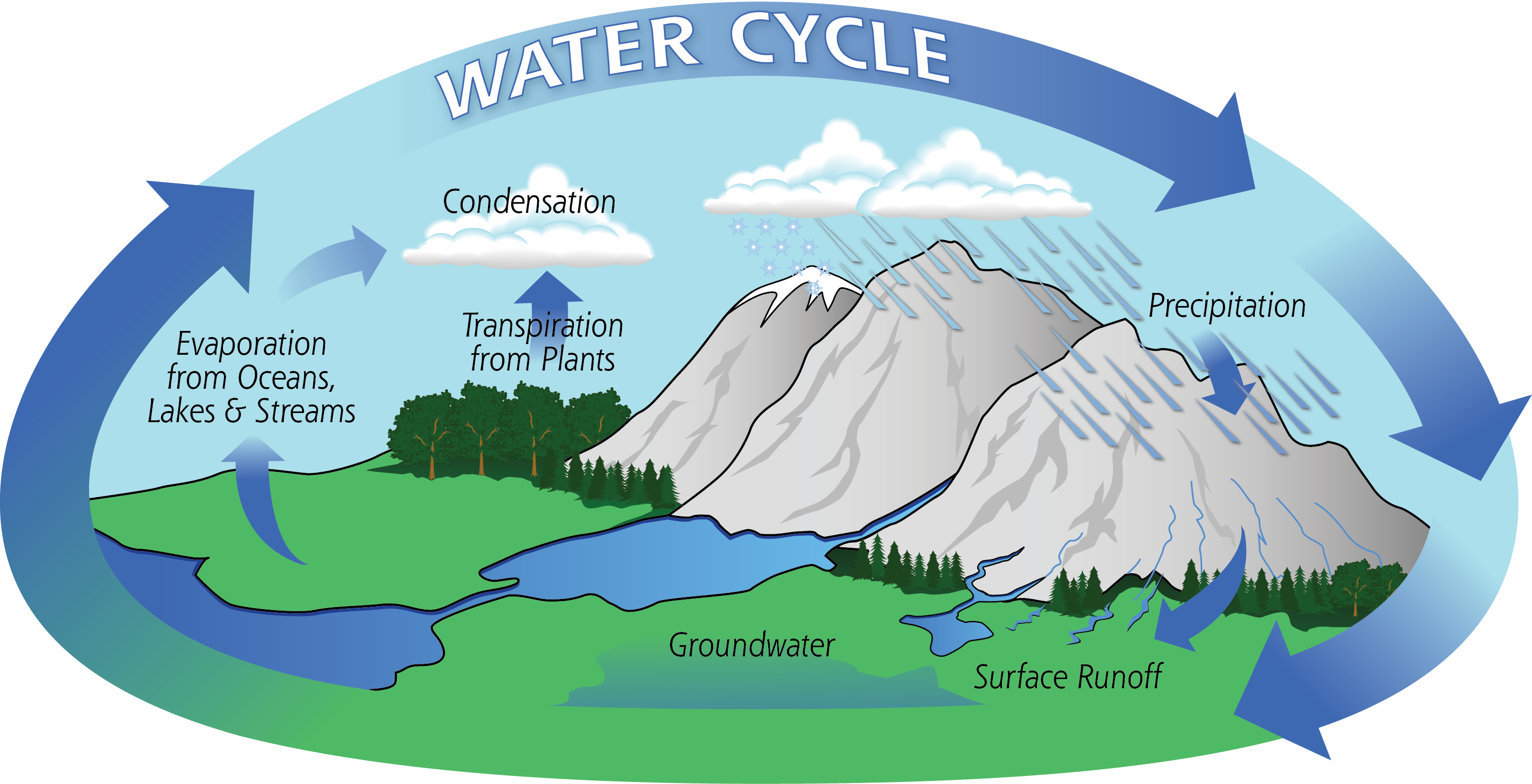
Water Cycle

AIM: TO LEARN ABOUT WATER ON EARTH.

Definition:

Related image

Scientific words:

  • Evaporation. When water is heated by radiant energy it turns into water vapor.
  • Transpiration. Evaporation from plants.
  • Condensation. When water vapor cools, molecules join together and form clouds.
  • Precipitation. When clouds get heavy the waters falls as rain, sleet, hail, or snow.
  • Acidification: the action or process of making or becoming acidic.

THE WATER CYCLE SONG

Image result for the water cycle

THE WATER CYCLE EXPERIMENT

Bag 1: Normal Water cycle
Bag 2: Water cycle with CO2 added: like Oceans in climate change
Bag 3: Water cycle with ice added: like Antarctica in climate change

Material:

  1.  Water
  2.  Blue food colouring 
  3.  Zip lock
  4.  Permanent pen.  

Steps:

  1.  Get a zip lock from the teacher. 
  2.  Draw about the water cycle on the zip lock.
  3.  Put water inside the zip lock after you have finish drawing on the zip lock.
  4.  Put blue food colouring in the zip lock so that the water will turn to blue. 
  5.  Tell the teacher that you have finish so that he could hang it up somewhere 

Two Images:


Findings:


The Water Cycle
Acid Water Cycle
Does it cycle?
21
Amount of Water
12
Acidity
12

Key: Water and acidity amount: 0 = none 
1 = small 
2 = large 

Other comments:


Conclusion: What I learnt about the water cycle and the acid water cycle of how small they are or how large they are depends on what it is about.


Friday, 13 September 2019

Drama

Hello There Everyone!

We have been working on our puppets and videos about the puppets and we have to do a background of some healthy things like fruits vegetables and some other more things. I haven't got any partner yet to do a video and practising the talking for the video.

We were also talking about how vegetables and fruits are healthy, it's because they have a lot of vitamins like vitamin C, vitamin A, vitamin B, vitamin D, vitamin E and vitamin K. There is a lot of of vitamins that are really good for you.


Thursday, 12 September 2019

Hurumanu - Solar Energy


Activity:

In pairs rate the livability of coal vs solar energy.

Comparing Coal energy with Solar energy ( Rate; 1 = poor to 10 = great)

Factor
Solar
Coal
Livability
6
3
Sustainability
10
2
Accessibility
8
5
Cost
5
4
Percent
10
9

Solar Sharing ( from 2040)

Conclusion
What I learnt today from science is about coal and solar.
We also have to guess how many percent or level is from the
solar and the coal from the Livability, Sustainability, Accessibility,
Cost and the Your choice at the bottom as well.